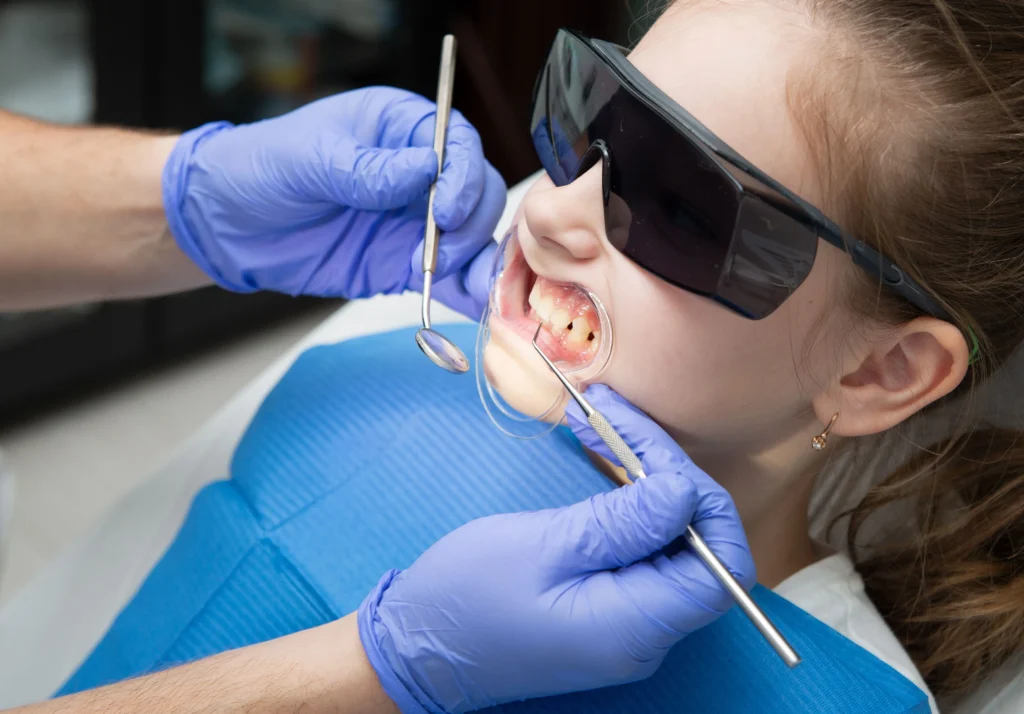
If your child’s dentist has recommended a dental crown, you’re not alone, and it doesn’t mean you’ve done anything wrong. Our board-certified pediatric dentist has spent more than 15 years helping families navigate exactly this kind of decision, and we’re here to make it straightforward. Pediatric dental crowns are a common, well-established way to protect a tooth that a filling alone can’t fully restore. Here’s what you need to know about the types of crowns available, how they compare, and how to decide which option fits your child’s situation, with no judgment and no pressure.
Why Kids May Need Dental Crowns in the First Place
Children’s dental crowns are typically recommended when a tooth has a cavity too large for a filling to reliably restore, when a tooth has undergone a pulpotomy procedure, or when trauma, a fracture, or a developmental enamel defect has left the tooth too compromised to protect any other way. If you’ve been looking into cavities in baby teeth treatment, a crown may come up as part of that conversation, and understanding why kids may need dental crowns can make that recommendation feel much less surprising.
Baby teeth matter more than many parents realize. They hold space for incoming permanent teeth, support speech development, and make chewing comfortable. Losing them too early can cause crowding later.
Children’s dental crowns are also more common than you might expect. According to the CDC’s 2024 Oral Health Surveillance Report, about 11% of children aged 2–5 years have untreated decay in their primary teeth, and nearly 1 in 5 children aged 6–8 already have tooth decay, making restorative solutions like pediatric dental crowns an important tool for protecting young smiles.
The Different Types of Dental Crowns for Kids
There are five main types of kids dental crowns used in pediatric dentistry, each made from different materials and suited to different clinical situations. Selecting among them takes some clinical judgment, and at our practice, that decision is always guided by a thorough evaluation of your child’s specific tooth, not a one-size-fits-all approach.
Stainless Steel Crowns
Stainless steel crowns are the most widely used option in pediatric dentistry. They’re prefabricated metal caps that fit over the entire tooth, making placement fast and reliable. Because they’re durable and affordable, they’re typically placed on back molars where strength matters most and appearance is less of a concern.
Zirconia Crowns
Zirconia crowns are tooth-colored ceramic caps that offer a natural-looking result. They’re strong, biocompatible, and a popular choice when a front tooth needs a crown. Placement requires more precision than stainless steel, but many parents prefer them for visible teeth.
Composite Strip Crowns
Composite strip crowns use a tooth-colored resin material built up over the existing tooth using a plastic mold. They’re best for front teeth with mild to moderate decay. They blend in well cosmetically but aren’t as durable as metal or zirconia options.
Open-Face Stainless Steel Crowns
Open-face crowns combine the durability of metal with a more aesthetic front surface. A stainless steel crown is fitted with a white composite window at the front and is typically used on front teeth when zirconia isn’t the right fit or isn’t available.
Polycarbonate Crowns
Polycarbonate crowns are temporary tooth-colored shells used for short-term front tooth coverage while a more permanent solution is planned. They’re a low-cost option but aren’t designed for long-term use.
Side-by-Side Comparison: Which Pediatric Dental Crown Type Works Best?
The best type of crown for your child’s needs depends on where the tooth sits, how much damage is present, and your budget. This table compares the main types of dental crowns for kids across the criteria that matter most to parents.
| Crown Type | Appearance | Durability | Placement | Cost/Insurance | Best Location |
| Stainless Steel | Silver/metal | Excellent | Simple, single visit | Low; widely covered | Back molars |
| Zirconia | Tooth-colored | Very good | Moderate | Higher; partial coverage | Front teeth |
| Composite Strip | Tooth-colored | Moderate | Moderate | Low-moderate; often covered | Front teeth (mild decay) |
| Open-Face SSC | Partial metal/white | Good | Moderate | Low-moderate; often covered | Front teeth |
| Polycarbonate | Tooth-colored | Low | Simple | Low; limited use | Temporary front coverage |
Stainless steel leads on durability and cost, making it the default choice for most child dental crowns placed on back teeth. Zirconia is the stronger choice for front teeth when the budget allows. Composite strip crowns work for front teeth with minimal decay but won’t hold up as well under heavy biting pressure.
How to Choose the Right Crown for Your Child’s Specific Situation
Choosing the right pediatric dental crown isn’t one-size-fits-all. At ChildSmiles Pediatric Dentistry, our board-certified pediatric dentist uses digital X-rays and advanced diagnostic technology to assess the full extent of damage before any recommendation is made, because the right choice depends on what’s happening inside the tooth, not just what’s visible on the surface.
Four factors tend to drive the decision. First, tooth location: back molars need stainless steel’s strength, while front teeth call for tooth-colored crowns for kids where appearance matters. Second, severity of decay: more extensive damage generally favors stainless steel for its full coverage and durability. Third, your child’s age and how long the tooth needs to last: a tooth close to falling out naturally may need a simpler solution rather than a premium material. Fourth, budget and insurance: stainless steel is covered by most dental plans, while zirconia may carry an out-of-pocket cost difference worth discussing with your provider.
At our practice, every crown recommendation comes with a full conversation about these factors so you feel confident before treatment begins.
What Happens When a Crown Is Placed and What to Expect After
A crown appointment follows a straightforward process. The dentist numbs the area, prepares the tooth by removing damaged material, then fits and cements the crown in place. Most placements are completed in a single visit. If your child needs extra support staying comfortable, nitrous oxide or other sedation options can be discussed beforehand so the experience feels manageable for them.
Some sensitivity in the first day or two is normal. Encourage your child to avoid sticky or hard foods briefly and to brush gently around the crown. The crown cleans just like a regular tooth with normal brushing and flossing.
If the crown ever feels loose or your child experiences unexpected pain, reach out to us right away. Our team handles kids dental crowns and dental emergencies promptly, so don’t wait to contact us if something feels off. And as your child grows, the crowned tooth will eventually fall out naturally on its own schedule. You can learn more about when baby teeth fall out and what to expect from that process.
Ready to Protect Your Child’s Smile?
A crown recommendation can feel like a big decision, but it’s one of the most reliable ways to protect a tooth and keep your child comfortable, confident, and cavity-free. Whether your child needs a stainless steel crown for a back molar or a tooth-colored option up front, our team will walk you through every step so you know exactly what to expect. As a trusted pediatric dentist in Fullerton, we’re here to answer your questions and help you feel good about the path forward. Reach out to schedule a visit and let’s find the right option for your child together.
FAQs about Dental Crowns for Children
Are dental crowns safe for baby teeth?
Yes. Crowns are a standard, well-established treatment in pediatric dentistry. Preserving baby teeth with a crown protects speech development, chewing function, and spacing for permanent teeth. The materials used, including stainless steel and zirconia, are both safe and biocompatible for children.
Do kids need to be sedated to get a crown?
Not always. Nitrous oxide is a commonly used comfort option that helps children relax without full sedation. At our practice, advanced sedation expertise means comfort options are always tailored to the individual child, not a one-size-fits-all protocol. Whether sedation is needed depends on your child’s age, temperament, and procedure complexity, and we’ll talk through the best approach with you beforehand.
How long do pediatric dental crowns last?
Stainless steel crowns typically last until the baby tooth falls out naturally. Zirconia is durable but can be more prone to chipping under heavy force. In most situations, the crown outlasts the tooth it protects, so replacement before natural exfoliation is rarely a concern.
Medically Reviewed by Dr. Mehdi Dowlaty, DDS, Board-Certified Pediatric Dentist