If you have noticed something different about the way your child’s teeth come together, you are not alone, and that uncertainty is completely understandable. A baby underbite, where the lower front teeth sit in front of the upper front teeth when the mouth is closed, is one of the more common bite concerns parents bring to a pediatric dentist. The good news is that with board-certified evaluation, most cases are very manageable, especially when identified early. This article walks through what causes an underbite in children, how to spot the signs at home, and what pediatric treatment options are available.
What Is a Baby Underbite?
A baby underbite, known clinically as Class III malocclusion, occurs when the lower front teeth extend in front of the upper front teeth when the mouth is closed. This can result from the lower jaw growing too far forward (mandibular prognathism), the upper jaw sitting too far back (maxillary retrusion), or a combination of both. In a normal bite, the upper teeth sit slightly forward of the lower teeth. An underbite reverses that relationship. Think of a bottom dresser drawer that sticks out too far instead of closing flush with the frame: that forward positioning of the lower jaw or lower teeth is what defines this condition.
An underbite is a form of dental malocclusion, a term that simply means the teeth do not fit together correctly when the jaw is closed. According to Boston Children’s Hospital, the majority of school-aged children have some degree of malocclusion, including overbites, underbites, and crossbites. That number is a reassuring reminder that most cases are manageable. A baby underbite is not rare, and it is not a reflection of anything you did wrong as a parent.
Is It Normal for Kids to Have an Underbite?
Many infant and toddler underbites are not true structural underbites. Before the primary teeth fully erupt, the jaws are still finding their natural resting position, and the appearance often self-corrects as the teeth come in.
A true structural underbite is different. A dental underbite comes from the position of the teeth themselves, often from habits or crowding, and is generally straightforward to treat. A skeletal underbite involves the bone structure: the lower jaw has grown larger than the upper jaw, or the upper jaw is underdeveloped. Skeletal underbites tend to become more pronounced as the child grows and usually need professional intervention. For toddlers, the approach is typically to monitor. For school-age children, especially as permanent teeth come in, a more active evaluation is appropriate, and a pediatric dentist can make the call quickly.
What Causes an Underbite in Children?
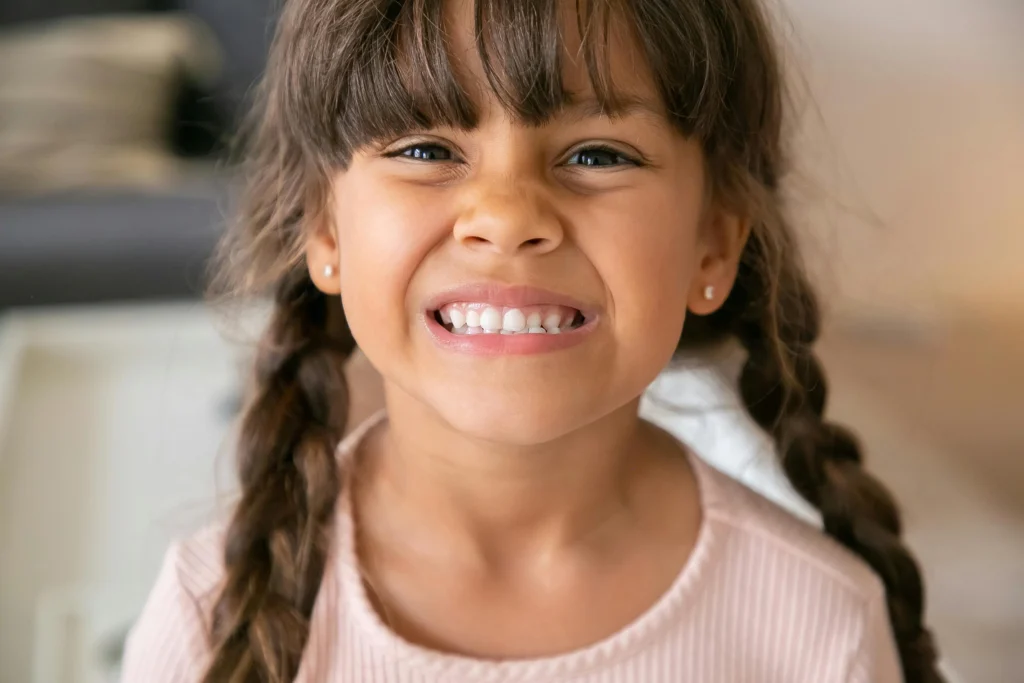
An underbite in kids rarely has a single cause. Most cases involve a combination of genetics, jaw development patterns, and sometimes certain oral habits. Understanding the causes can help parents stop worrying about what they might have done differently, because in most cases, the primary driver is simply how a child’s body is built.
Did My Child Inherit This Underbite?
Genetics play the largest role in most underbite cases. Jaw shape and size are inherited traits, like eye color or nose shape. If a parent, grandparent, or sibling has a prominent lower jaw, the child is at higher risk of developing a similar bite pattern. This is not something anyone can prevent. An inherited jaw structure is part of a child’s blueprint from birth, and recognizing it early simply means treatment can be planned at the right time.
Can Uneven Jaw Growth Cause an Underbite?
Yes. The lower jaw and upper jaw do not always grow at the same pace. In some children, the lower jaw grows faster than the upper jaw, or the upper jaw simply does not develop to its full size. This mismatch creates a skeletal underbite, which often becomes more apparent around ages 6 to 7, as the permanent front teeth come in. Skeletal underbites are typically the more complex cases to treat and benefit most from early evaluation.
Can Thumb Sucking or Pacifier Use Cause an Underbite?
Prolonged thumb sucking, extended pacifier use, and chronic mouth breathing can all contribute to bite misalignment. These habits place consistent pressure on developing teeth and jaw structures, gradually shifting their positioning. The key word is prolonged. Occasional pacifier use in infancy is not a cause for alarm. Extended habits, typically those continuing past age 3 or 4, are what tend to have a measurable effect.
How to Spot an Underbite in Your Child
Spotting an underbite in children does not always require a dental X-ray. Many parents notice signs at home across four categories.
Visual signs are the most direct: the lower front teeth sitting in front of the upper front teeth when your child closes their mouth and relaxes their jaw. This is often visible in profile photos. Functional signs show up at mealtimes. If your child struggles to bite into an apple or banana without turning their head, or has difficulty chewing tough foods, that is worth noting.
Speech signs are another clue. A child underbite can affect how certain sounds are formed. A noticeable lisp, difficulty with “s,” “z,” or “sh” sounds, or speech that seems effortful may have a dental component. Speech therapists and pediatric dentists sometimes work together when both issues are present. Facial signs round out the list: a jaw that appears to jut forward or a chin that looks more prominent than expected can be a visible indicator of a skeletal underbite.
Some underbites are subtle and only visible to a trained professional. If you notice signs at home, scheduling your child’s first dental visit is a gentle, low-pressure way to get answers.
Underbite Treatment Options for Children
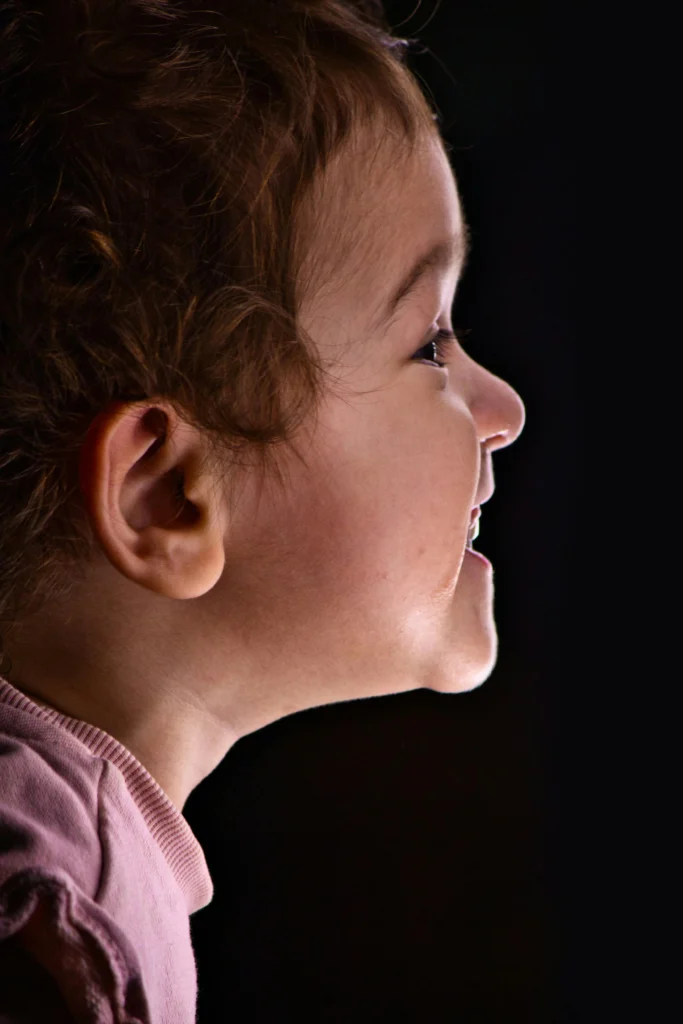
Treating an underbite in children is most successful when the jaw is still actively growing, which is why timing matters. Early identification does not always mean immediate treatment, but it does mean the right plan can be put in place at the right time. Recommendations should consider the cause of the underbite, whether dental or skeletal, along with the severity and the child’s age.
What Is a Reverse-Pull Face Mask?
A reverse-pull face mask is an orthodontic appliance that gently pulls the upper jaw forward to help it catch up with the lower jaw. It acts as a gentle guide, encouraging the upper jaw into better position over time. This approach works best for children between ages 7 and 10, when the facial bones are still growing. It is typically worn for several months and is most effective for skeletal underbites where the upper jaw is underdeveloped.
How Does a Palate Expander Help With an Underbite?
A palate expander widens the upper jaw so it aligns more evenly with the lower jaw. It is placed inside the roof of the mouth and applies gradual, gentle pressure over several months. This is often used when the upper jaw is narrower than it should be. Palate expanders work well for both dental and mild skeletal underbites and are typically most effective before the palatal bones fully fuse, generally before age 12 to 14.
Can Braces Fix a Child’s Underbite?
Traditional braces and clear aligners can correct mild to moderate underbites, particularly those that are dental in origin, meaning the problem is in tooth position rather than jaw structure. Braces gradually move teeth into proper alignment, improving how the upper and lower teeth meet. They are best suited for older children and adolescents with most or all of their permanent teeth and are typically combined with other appliances for skeletal cases.
When Is Surgery Needed for an Underbite?
Severe skeletal underbites that do not respond to early intervention may eventually require orthognathic surgery, a procedure that repositions the jaw. This is performed after jaw growth is complete, usually in the late teenage years. Surgery is always a last resort, and one of the clearest benefits of early treatment is that it significantly reduces the likelihood of needing it later.
Why Early Detection Makes All the Difference
The jaw is most responsive to correction during active growth, roughly between ages 6 and 10. Redirecting jaw development at this stage is far more effective than reshaping a jaw that has already finished growing.
Left unaddressed, underbites are associated with uneven tooth wear, sensitivity, chipping, and enamel damage, since the teeth meet at the wrong angles. Jaw strain and TMJ discomfort can develop as the muscles compensate, along with speech difficulties and self-consciousness about appearance. The American Association of Orthodontists recommends an initial orthodontic screening by age 7, not because treatment always starts then, but because that window gives specialists the clearest picture of how the jaw and teeth are developing.
The Bottom Line on Baby Underbites
A baby underbite is one of the most manageable dental concerns in children, especially when caught during active growth. Whether your child’s bite needs treatment or simply monitoring, knowing where things stand brings real peace of mind, and the earlier you have that conversation, the more options stay on the table. If you have noticed signs of an underbite, or simply want reassurance, our team at ChildSmiles OC, a trusted pediatric dentist in Fullerton, is here to help with a no-pressure evaluation in a warm, kid-friendly setting.
FAQs about Baby Underbites
At what age should I have my child evaluated for an underbite?
If you notice signs of a bite concern, bringing your child in as young as ages 3 to 4 is appropriate. Early evaluation does not mean treatment starts right away, just that you have more time and more options.
Can a baby underbite correct itself?
Some infant underbites resolve as the jaw develops, but a true structural underbite, especially a skeletal one, rarely corrects without intervention. A pediatric dentist can quickly tell the difference.
Is an underbite in a toddler something to worry about right away?
Toddler underbites are common and do not always need immediate treatment. Monitoring is the right first step, so you will know early if it is deepening rather than resolving.
Does thumb sucking cause underbites?
Prolonged thumb sucking and pacifier use can contribute to bite misalignment, but they are rarely the sole cause. Genetics and jaw development typically play a larger role.
Medically Reviewed by Dr. Mehdi Dowlaty, DDS, Board-Certified Pediatric Dentist