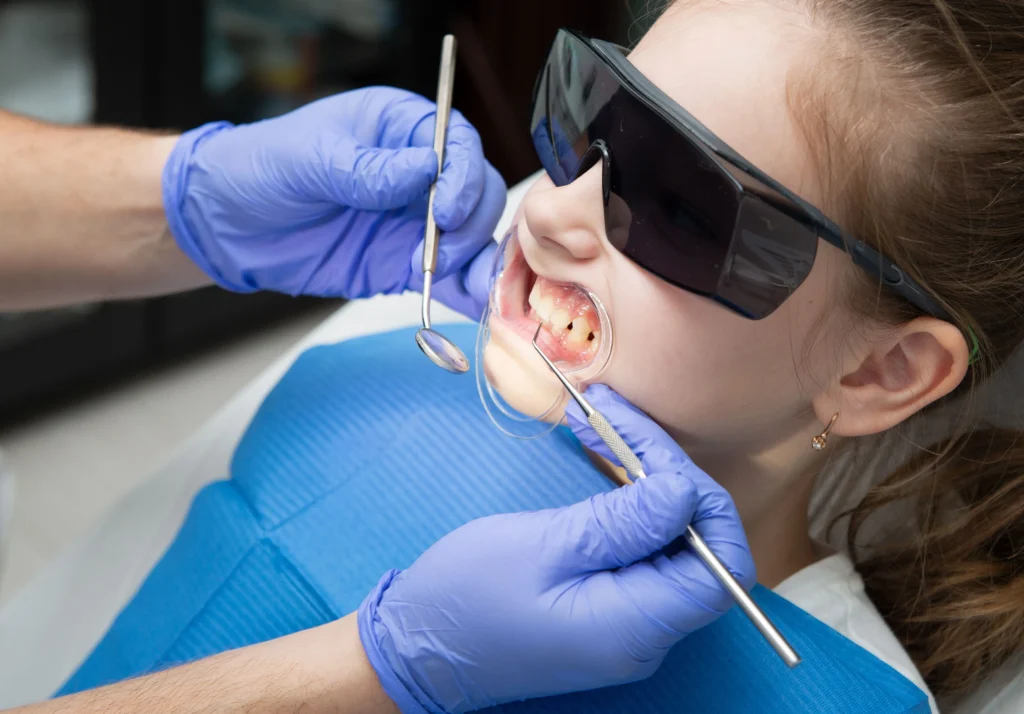
Crowded teeth often run in families and for many parents, seeing that familiar overlap emerge in a child’s smile is the first sign that early action could make a real difference. This guide covers what causes dental crowding in children, what health risks it creates, and what treatment options are available at every stage of childhood. At Child Smiles, our specialist-led team takes a gentle, parent-first approach to help families understand their options before crowding becomes harder to manage.
What Are Crowded Teeth in Children?
Crowded teeth occur when there isn’t enough space in your child’s jaw for all their teeth to line up properly. Instead of sitting in a neat arch, teeth may overlap, twist, rotate, or get pushed forward or backward out of alignment. This condition can affect the upper arch, the lower arch, or both. When crowded top and bottom teeth are both involved in a child’s smile, the bite misalignment tends to be more noticeable and may require more involved treatment.
Overcrowded teeth in kids are not just a cosmetic issue. According to a scoping review published in the National Library of Medicine, crowding is the most frequent malocclusion seen in orthodontics, and it has a strong hereditary tendency, meaning it can run in families. Recognizing the signs early in childhood, while the jaw is still growing, makes a meaningful difference in treatment outcomes.
What Causes Crowded Teeth in Kids?
Dental crowding in children doesn’t have a single cause. Several factors such as genetics, development, and behavior, can contribute to overcrowded teeth. Understanding the specific cause helps guide the right treatment approach and can inform whether early intervention is the right move for your child.
Genetics and Jaw Size
The strongest predictor of crowding in kids is family history. If one or both parents had braces or crowded teeth, their children have a higher chance of developing the same issue. Jaw shape, jaw size, and individual tooth size are largely inherited traits passed from parent to child.
Early Loss of Baby Teeth
When a primary tooth is lost too soon due to decay or injury, neighboring teeth can drift into the open space. This reduces room for the permanent tooth trying to erupt, setting the stage for crowding before adult teeth even come in. Space maintainers placed by a pediatric dentist can help prevent this from happening.
Thumb Sucking and Pacifier Habits
Prolonged thumb sucking or pacifier use beyond age three or four can push a child’s teeth forward and alter the shape of the developing jaw. These shifts reduce available arch space and contribute directly to teeth crowding in kids. Early habit counseling can limit the impact before permanent teeth begin to come in.
Mouth Breathing
Children who breathe primarily through their mouth may develop a narrower, higher-arched palate over time. When a child’s mouth stays open at rest, the tongue isn’t pressing against the palate as it normally would, which means the upper jaw loses a key developmental signal that helps it widen correctly. This reduces upper jaw width and limits space for incoming teeth, contributing to crowding even when no other risk factors are present.
Impacted or Extra Teeth
Sometimes a tooth fails to erupt correctly and becomes impacted, or a child develops extra teeth. Either scenario crowds neighboring teeth significantly and often requires evaluation by a Pediatric Dentist in Fullerton to determine the right path forward for your child.
Types and Degrees of Dental Crowding in Kids

Teeth crowding in children exists on a spectrum, and the degree of crowding directly influences what kind of treatment is appropriate at your child’s stage of development.
What the Different Levels of Crowding Mean for Your Child
Pediatric dental professionals measure crowding by calculating how much space is needed versus how much is actually available in your child’s arch, expressed in millimeters:
- Mild crowding (1–3mm of discrepancy): teeth may appear slightly overlapped but are mostly aligned
- Moderate crowding (4–6mm): visible overlapping, rotation, or displacement of multiple teeth
- Severe crowding (7mm or more): significant misalignment; teeth may be dramatically twisted or displaced
Severe crowding in children often requires more complex solutions, such as tooth extraction before orthodontic treatment or, in some cases, a specialist consultation. Overcrowded top and bottom teeth together at a severe level generally signals a more involved treatment plan for your child.
Are All Types of Crowding in Kids Caused the Same Way?
Not exactly. Pediatric clinicians distinguish between two categories: primary crowding, which stems from a tooth-size to arch-size mismatch (largely genetic), and secondary crowding, which results from environmental factors like early baby tooth loss, oral habits, or mouth breathing. Identifying the type helps determine whether treatment can be interceptive, addressing the cause while your child’s jaw is still growing, or whether it needs to wait until more permanent teeth are in place.
Can Crowded Teeth Cause Pain and Other Health Problems for Kids?
Yes, dental crowding in children is not just a cosmetic concern. Left untreated, overcrowded teeth can lead to real, compounding health problems as your child grows. Here’s what parents should know:
- Difficulty cleaning: Overlapping teeth create tight spaces that a child’s toothbrush and floss can’t reach effectively. Plaque accumulates in these areas, raising the risk of cavities and gum disease.
- Gum disease: When plaque builds up in hard-to-reach spaces, your child’s gums become inflamed. Chronic crowding increases the long-term risk of periodontal disease into adulthood.
- Jaw pain and TMJ issues: Dental crowding changes how teeth meet when biting and chewing. Over time, this uneven pressure can strain a child’s jaw joint and contribute to TMJ discomfort or headaches.
- Abnormal tooth wear: Teeth that press against each other at odd angles wear down unevenly, weakening enamel even on young teeth.
- Speech and chewing difficulties: Significant crowding can affect how children bite into food or pronounce certain sounds.
- Confidence and self-esteem: For kids and teens, visible crowding can affect how comfortable they feel smiling, laughing, or speaking up at school.
The good news is that most of these risks are preventable with early detection, which is why regular pediatric dental checkups play such an important role in catching crowding before it compounds.
How to Fix Crowded Teeth in Kids: Treatment Options by Age and Severity

There is no one-size-fits-all fix for crowded teeth in children, the right path depends on your child’s age, severity of crowding, and individual jaw development. Below is an overview of the treatments most commonly recommended for kids, and where each one fits in.
Traditional Braces
Traditional braces remain the gold standard for treatment of overcrowded teeth in children, particularly in moderate to severe cases. Metal brackets and wires apply consistent, precise pressure to move teeth, and they work well once most permanent teeth have erupted. Average treatment time for kids ranges from 18 to 36 months depending on severity.
Clear Aligners
Clear aligners have become an increasingly popular and effective option for mild to moderate crowding, especially for teens who prefer a less visible treatment. They’re removable, which makes oral hygiene easier during treatment for active kids. Clear aligners do have real limitations for severe crowding or complex bite issues. Those cases typically need braces or a combination approach, and they require a level of responsibility that not every child is ready for.
Palate Expanders
A palate expander is a device used in children whose jaws are still growing. It gently widens the upper arch over several months, creating more space for permanent teeth to erupt without the need for extractions.
Tooth Extraction
Tooth extraction isn’t a default, it’s typically considered only for severe crowding when there genuinely isn’t enough arch space, even with expansion, for all of your child’s teeth to align properly. It’s a targeted decision made after a full evaluation, and palate expanders combined with early intervention can sometimes eliminate the need for extraction entirely in young patients.
Timing Matters
When treatment happens is just as important as which treatment is chosen. Children between ages 7 and 10 are in the ideal window for interceptive treatment, when the jaw is still responsive to guidance. Teens have the widest range of options once permanent teeth have come in. Waiting until adulthood means jaw expansion is no longer possible, earlier is nearly always easier for kids.
How to Fix Crowded Teeth in Kids Without Braces
For mild to moderate crowding in older children and teens, there are effective options that don’t involve traditional metal braces, but it’s worth being honest with parents about what those options can and can’t do.
Clear aligners are the most clinically sound non-brace path for treatment of overcrowded teeth in the mild to moderate range, and they work well for responsible older kids and teens. Custom-made trays shift teeth gradually, and many young patients achieve results comparable to braces for appropriate cases. The important caveat: clear aligners have documented limitations with severe crowding, significantly rotated teeth, and cases involving major bite correction. They are not a universal solution for every child.
Dental bonding can reshape a mildly crowded tooth’s appearance using tooth-colored composite resin, but it’s a cosmetic adjustment, not an orthodontic one; the teeth don’t actually move. For children, bonding is generally reserved for very specific situations and is not a substitute for orthodontic care.
Crowded Teeth in Children: Why Early Detection Changes Everything

Early detection is genuinely one of the most valuable things a parent can act on when it comes to dental crowding. At Child Smiles, our team is deeply focused on preventative care and early intervention, because catching crowding while your child’s jaw is still growing opens treatment doors that simply aren’t available later, all in an environment designed to feel comfortable and stress-free for kids and families.
How Do I Know If My Child Is Developing Dental Crowding?
Watch for these signs, especially as permanent teeth begin to come in:
- Baby teeth that overlap noticeably
- Permanent teeth erupting behind or in front of existing teeth
- Early or very late loss of primary teeth
- Consistent mouth breathing
- Thumb sucking or pacifier use beyond age three or four
If any of these signs sound familiar, bringing it up at your child’s first dental visit, or scheduling one if you haven’t yet, is the right starting point.
What Is Phase 1 Orthodontics and How Does It Address Crowding Early in Kids?
Phase 1 orthodontics, also called interceptive orthodontics, refers to treatment that begins between ages 7 and 10, before all of your child’s permanent teeth have erupted. The goal is to guide jaw growth, widen the arch if needed, and create enough space so that incoming teeth have room to align properly. In many cases, early palate expansion during Phase 1 reduces or eliminates the need for tooth extractions later. Without this window, crowding in kids tends to worsen as permanent teeth continue to erupt and treatment in the teen years often becomes longer and more complex as a result. The American Association of Orthodontists recommends a first orthodontic evaluation by age 7 specifically to identify children who could benefit from this early intervention.
Help Your Child’s Smile Grow Up Straight and Book an Evaluation Today
Crowded teeth in children are common, but they are far from inevitable in their outcome. The earlier a family gets ahead of the problem, the more treatment options are available and the less complex care tends to be. If you’ve noticed signs of crowding in your child’s smile, the best next step is an early evaluation. At Child Smiles, our team makes those first visits as comfortable and stress-free as possible. If you’re ready to take the next step, explore our pediatric orthodontics treatment options or book an evaluation today.
FAQs about Crowded Teeth in Kids
What is crowding or overcrowding of teeth in children?
Dental crowding in kids occurs when there is insufficient space in the jaw arch for all teeth to erupt in proper alignment. The result is teeth that overlap, twist, rotate, or get displaced out of position. It is the most common orthodontic problem seen in children.
Can crowded teeth cause pain in kids?
Yes. Crowding can cause jaw soreness, TMJ strain, gum tenderness, and headaches in children, particularly when bite misalignment is significant. Crowded teeth are also harder for kids to clean, which raises cavity and gum disease risk over time.
How early can crowded teeth be treated in children?
The American Association of Orthodontists recommends a first orthodontic evaluation by age 7. Interceptive Phase 1 treatment can begin as early as ages 7 to 10, using devices like palate expanders to guide jaw growth while your child is still developing.
Can crowded teeth in kids get worse over time?
Yes. Without treatment, crowding typically worsens as permanent teeth continue to erupt and your child’s jaw finishes growing. Crowding rarely resolves on its own and is often easier to address during active growth than after.
Is it possible to fix crowded teeth in kids without braces?
For mild to moderate cases in older children and teens, clear aligners are an effective non-brace option. Severe crowding almost always requires traditional orthodontic treatment, and in some cases, extraction before braces.