Choosing the best toothbrush for kids with braces is one of the most important steps parents can take to protect their child’s oral health during orthodontic treatment. Braces create extra surfaces where plaque and food particles collect, increasing the risk of cavities, gum inflammation, and permanent white spot lesions if brushing is not thorough and consistent.
A standard kids’ toothbrush is often no longer enough once brackets and wires are involved. The right toothbrush helps clean around orthodontic appliances effectively while staying gentle on developing teeth and sensitive gums. Understanding which features matter allows parents to support healthier brushing habits and reduce common orthodontic issues before they become bigger problems.
A trusted Pediatric Dentist in Fullerton, such as Child Smiles OC, can also help guide families toward the best option based on a child’s age, brushing ability, and braces type. If your child has recently started orthodontic treatment, now is the ideal time to reassess their toothbrush and brushing routine to protect their smile throughout treatment.
Why Kids With Braces Need a Specialized Toothbrush
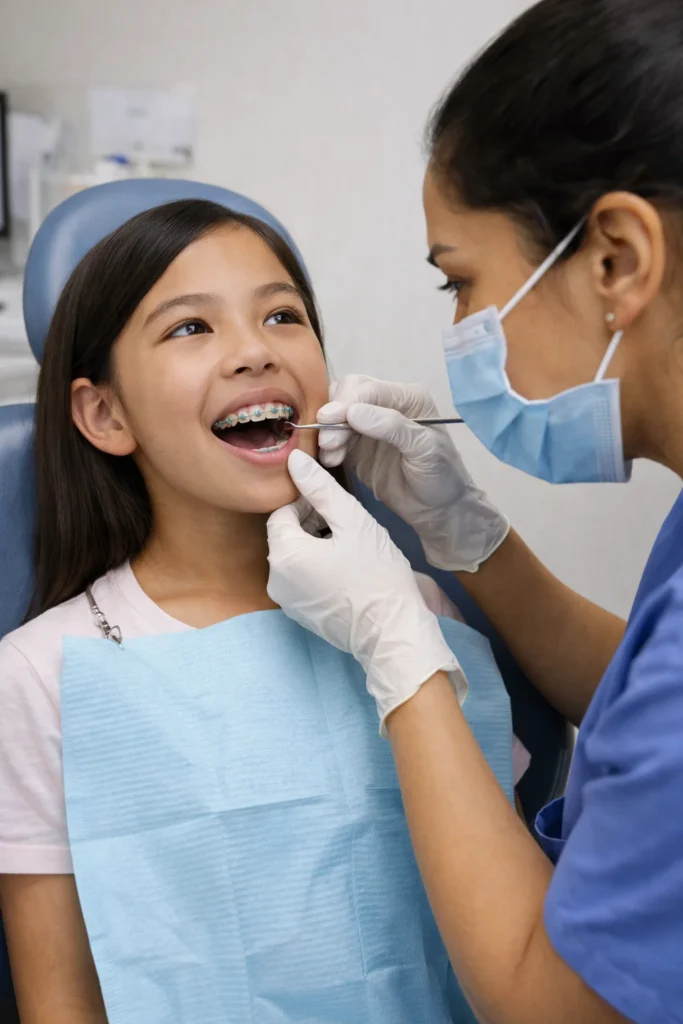
Braces create tight spaces around brackets and wires where plaque builds up quickly. These areas are difficult to reach with a basic toothbrush, even for children who brush regularly.
A toothbrush for braces is designed to clean around orthodontic hardware without damaging enamel or irritating the gums. Using the wrong brush can leave plaque behind, increase inflammation, or cause children to brush too aggressively in an attempt to “scrub” around brackets. Over time, this can lead to enamel wear or gum recession.
The right toothbrush for kids with braces improves access, comfort, and overall cleaning effectiveness, making it easier for children to maintain healthy habits throughout orthodontic care.
Manual vs Kids Electric Toothbrush Options
Parents often debate whether a manual brush or a kids’ electric toothbrush works better with braces. Both can be effective, but they serve different needs depending on the child.
An electric toothbrush for kids provides consistent motion that helps remove plaque around brackets and along the gumline more efficiently. Many children also brush longer and more carefully with electric brushes because the motion does more of the work for them.
A well-designed manual kids’ toothbrush can still work when the brushing technique is strong and properly supervised. Manual brushes are also useful as travel or school backups. For many families, combining an electric brush at home with a manual option on the go offers flexibility without sacrificing oral hygiene.
Bristle Type and Brush Head Size Matter
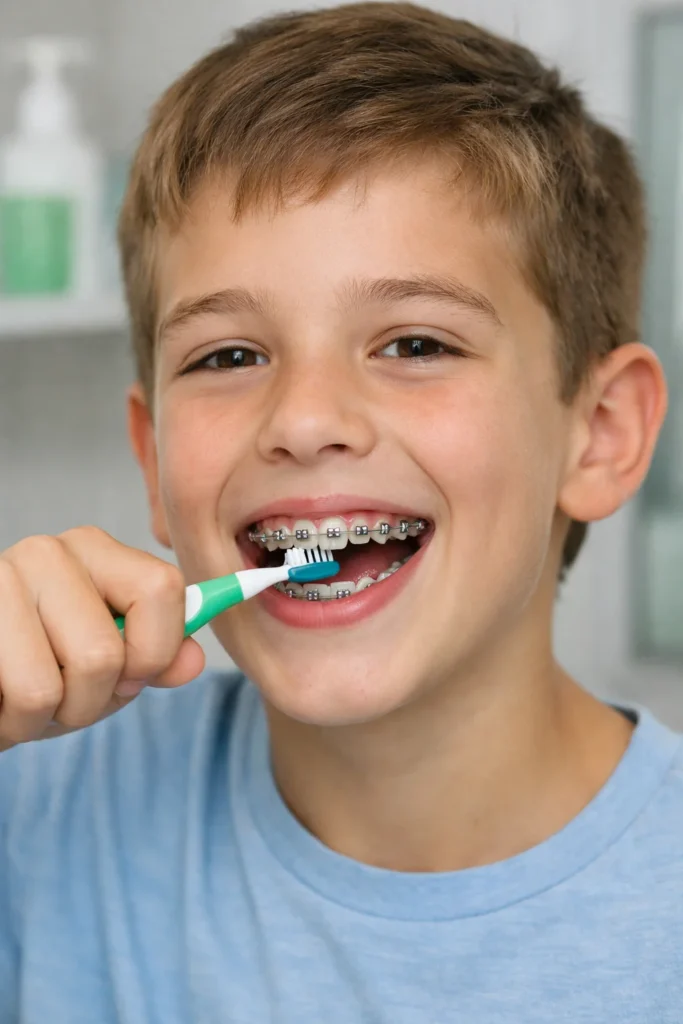
Soft bristles are essential for any dental braces toothbrush. Hard or medium bristles can irritate gums and wear enamel around brackets, especially when children brush too forcefully.
Brush head size is equally important. Smaller heads make it easier to reach behind wires, clean along the gumline, and access back teeth without discomfort. Large brush heads often miss critical areas around orthodontic hardware.
The best kids’ toothbrush for braces combines soft bristles with a compact, easy-to-control head that allows children to clean effectively without frustration.
Features to Look for in the Best Toothbrush For Kids With Braces
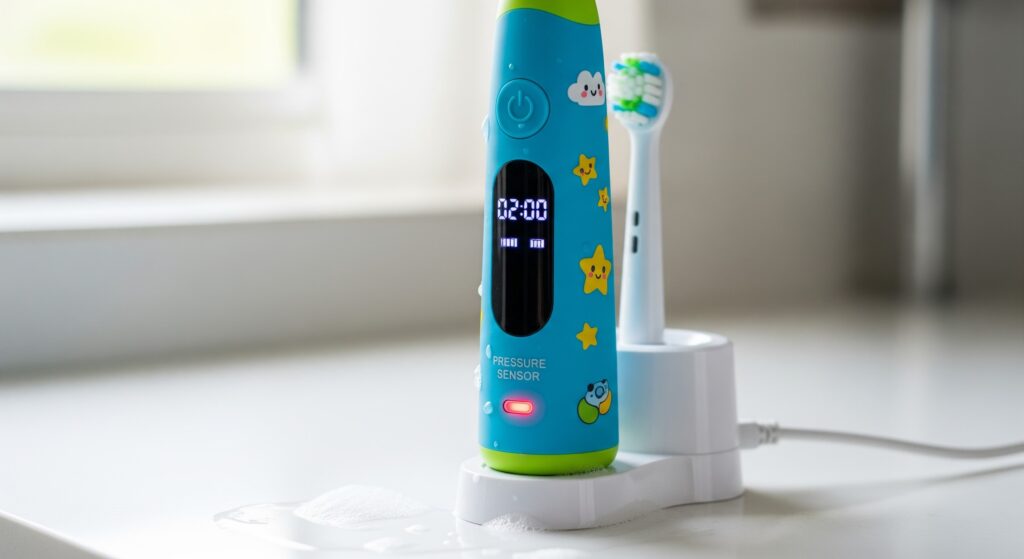
The best electric toothbrush for braces includes features that actively support orthodontic care. Pressure sensors help prevent aggressive brushing that can damage enamel and gums. Built-in timers encourage kids to brush for the full recommended two minutes.
Some models offer orthodontic-specific brush heads designed to clean around brackets and wires more effectively. Simple controls are also important so children can use the brush correctly without confusion.
The best kids’ electric toothbrush is not the most advanced model available. It is the one a child will use comfortably and consistently every day.
Age Appropriate Design and Comfort
Children are far more likely to brush properly when their toothbrush feels comfortable and age-appropriate. A brush that is too heavy, loud, or complicated can discourage regular use.
The best children’s electric toothbrush should be lightweight, easy to grip, and sized appropriately for smaller mouths. Younger children may respond better to fun designs, while older kids with braces often prefer a more mature look that feels less “babyish.”
Comfort directly affects consistency. When a toothbrush feels good to use, kids are more likely to brush thoroughly and without resistance.
How Often to Replace a Toothbrush With Braces
Braces cause toothbrush bristles to wear out faster due to constant contact with brackets and wires. Toothbrushes should be replaced every three months, or sooner if bristles appear frayed or flattened.
Worn bristles reduce cleaning effectiveness and can irritate gums, especially around orthodontic appliances. Regular replacement ensures the toothbrush continues to do its job properly throughout treatment.
Replacing brush heads on schedule is one of the simplest ways to maintain strong oral hygiene during braces.
Supporting Orthodontic Smiles at Child Smiles OC
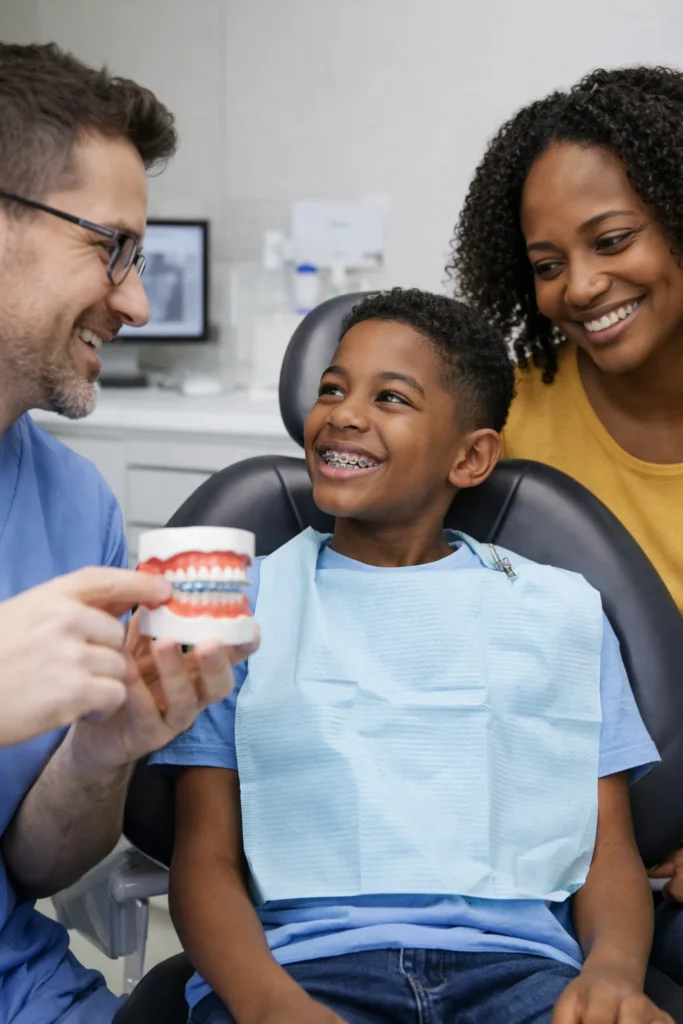
Choosing the ideal toothbrush for kids with braces supports daily oral care, but long-term success comes from consistency, guidance, and professional monitoring. Proper tools combined with good habits help prevent cavities, gum issues, and permanent enamel damage during orthodontic treatment.
At Child Smiles OC, families receive personalized support to help children care for their teeth while wearing braces. From the best children’s toothbrush recommendations to preventive education, the focus is on protecting growing smiles at every stage of development and ensuring orthodontic treatment leads to healthy, confident results.
FAQs About Toothbrushes for Kids With Braces
What is the toothbrush that works best for kids with braces?
The effective toothbrush for kids with braces has soft bristles, a small head, and is designed to clean around brackets and wires. Electric toothbrushes often provide added cleaning benefits.
Is an electric toothbrush better for braces?
An electric toothbrush for kids can make brushing easier and more effective around orthodontic appliances, especially for children who struggle with technique.
Can kids use a regular toothbrush with braces?
A regular kids’ toothbrush can work if it has soft bristles and a small head, but braces-specific designs usually clean more effectively.
How often should a toothbrush be replaced with braces?
Every three months or sooner if the bristles show signs of wear.
How can Child Smiles OC help during orthodontic care?
We provide preventive guidance, hygiene education, and ongoing dental support to help children maintain healthy teeth and gums throughout braces treatment.